
Hayden was introduced to motorsport at the age of 6 through karting and competed in his first rally in 2002 at the age of 15. He began competing in the NZ Rally Championship in 2006, going on to win 4 national rally titles. After winning the Production World Rally Championship in 2011, Hayden debuted for the Hyundai factory WRC team in 2014 before signing a multi-year contract. 5 years at the elite level in the WRC brought with it 1 event victory (Argentina 2016), 8 podium finishes and 38 stage wins. He finished 4th in the 13-round 2016 World Championship.
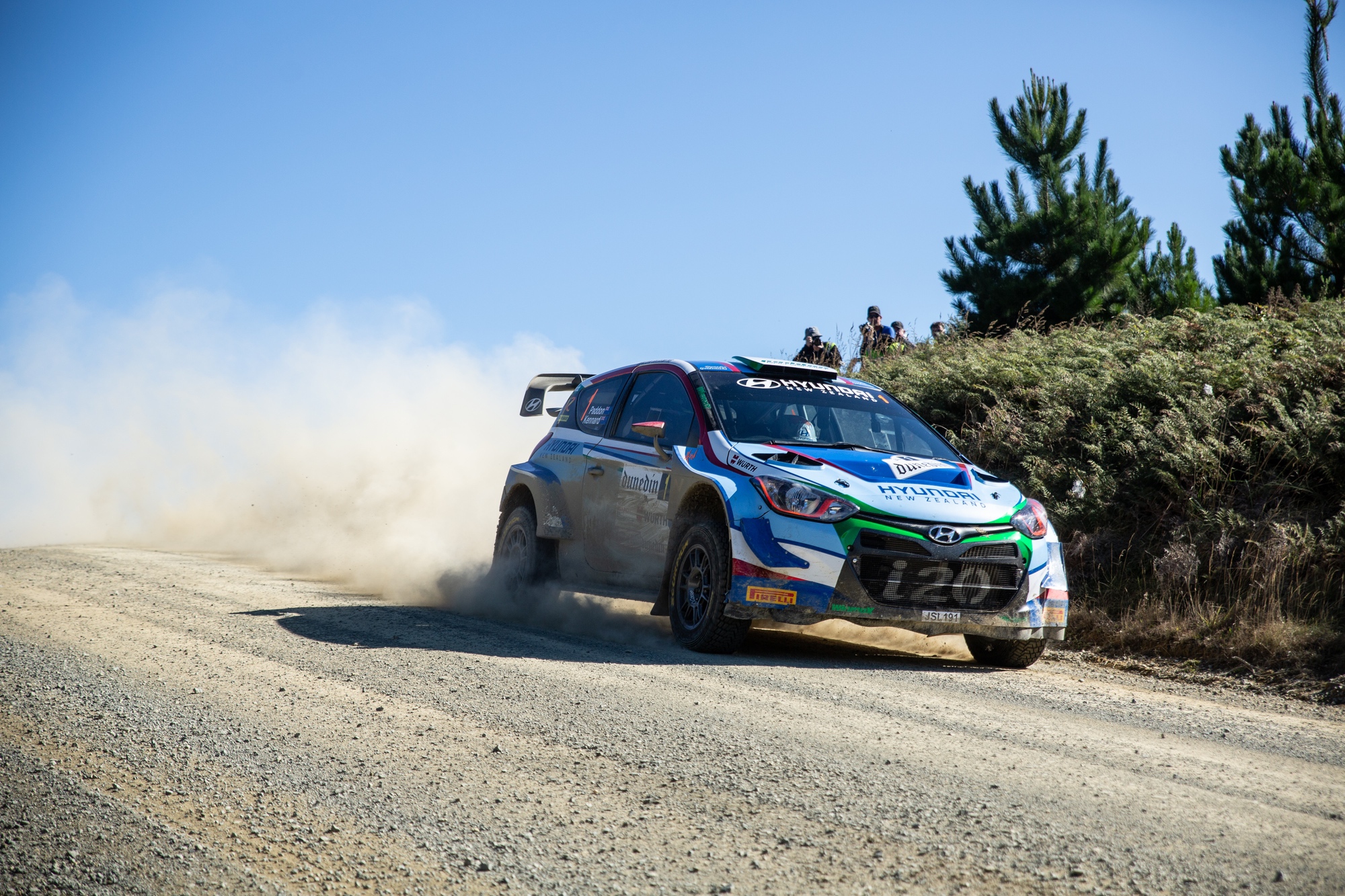
Hayden Paddon - 2016 Hyundai i20 AP4++
Hayden was introduced to motorsport at the age of 6 through karting and competed in his first rally in 2002 at the age of 15. He began competing in the NZ Rally Championship in 2006, going on to win 4 national rally titles. After winning the Production World Rally Championship in 2011, Hayden debuted for the Hyundai factory WRC team in 2014 before signing a multi-year contract. 5 years at the elite level in the WRC brought with it 1 event victory (Argentina 2016), 8 podium finishes and 38 stage wins. He finished 4th in the 13-round 2016 World Championship.
2016 Hyundai i20 AP4++:
The AP4++ is built from a production-based Hyundai i20 road car to meet AP4 specifications. Hayden has competed with the car in New Zealand Rally Championship events since 2006. It can be converted between Rally and Hillclimb specification depending on the event. In rally-specification the car utilises an 1800cc restricted engine paired
with a Sadev 4WD sequential gearbox and long-travel EXT suspension. A MoTeC Engine Management unit controls the vehicle and driver displays in both specifications. For Hillclimb-spec the car uses the rally-spec chassis with a few upgrades. The team have built a bigger horsepower engine producing 750hp. Along with the additional horsepower, the aerodynamics have been improved. This is achieved by employing a much larger rear wing, which is wider, higher and has more elements. Additionally, a rear diffuser is fitted to the rear of the vehicle while up front the team have developed a front splitter which incorporates larger dive planes.